
Fact Sheet: Ethanol Biorefineries
Ethanol Basics
The primary feedstock of ethanol is corn.1 Currently 18% of the U.S. corn crop2 and 15% of the sorghum crop goes into ethanol production annually. 3 The U.S. annually consumes 142 billion gallons of gasoline4 and now has the capability to produce a record 7.2 billion gallons of ethanol per year.5 The Energy Policy Act of 2005 mandates production of 7.5 billion gallons per year by 20126 and the Energy Independence and Security Act of 2007 creates an impossible goal of producing 36 billion gallons of renewable fuels, including 17 billion gallons of corn ethanol by 2022.7 Achieving this will require approximately 83 million acres8 —almost 90% of the current corn production in the entire United States.9 This is spawning a massive growth in proposals for noisy,10 polluting ethanol biorefineries, but will do little to cut oil imports. A 1997 congressional report concluded, "ethanol's potential for substituting for petroleum is so small that it is unlikely to significantly affect overall energy security."11
As of July 2008, there are 160 ethanol plants in operation, 7 being expanded and 123 more under construction.12 A total of about 200-300 are proposed.13
Industrial Agriculture - Food Vs. Fuel?
Of all crops grown in the U.S., corn demands the most massive fixes of herbicides, insecticides, and natural gas-based fertilizers, while creating the most soil erosion.14 85% of U.S. corn is genetically engineered.15 Ethanol is increasingly derived from biotech corn varieties.16 USDA Proposes First Ever Industrial GE Crop
Biotech corn comes in two main varieties: one where the corn produces Bt toxin to kill the European corn borer, and one that enables the corn to withstand higher doses of commercial herbicides like Aventis' Liberty or Monsanto's Roundup,17 with Roundup having been found to be more toxic than previously thought, especially to amphibians.18 Both Bt and herbicide-resistant corn can lead to the development of resistance in bugs and weeds. Bt is a soil bacteria used as a pesticide of last resort by organic farmers because Bt resistant bugs are a major problem. Both methods also risk genetic pollution,19 spreading the biotech attributes to nearby crops, wild relatives or weeds.20
Meeting the lifetime fuel requirements of just one year's worth of U.S. population growth with straight ethanol (assuming each baby lived 70 years), would cost 52,000 tons of insecticides, 735,000 tons of herbicides, 93 million tons of fertilizer, and the loss of 2 inches of soil from the 12.3 billion acres on which the corn was grown.21 The U.S. only has 2.263 billion acres of land and soil depletion is already a critical issue. Soil is being lost from corn plantations about 12 times faster than it is being rebuilt.22
Wetlands – the most productive fish and wildlife habitat there is – consume nitrogen and filter out pesticides and sediments, but wetlands are being drained in order to produce surplus corn. The Corn Belt has lost about 70 percent of its wetlands. In some areas, corn has to be irrigated by pumps that suck water from the ground faster than it percolates back in. Moreover, the pumps are powered by natural gas, the frenzied production of which is creating horrendous problems for fish and wildlife.23
Energy (in)Security
Ethanol is promoted in “energy security” terms, yet our ability to grow corn is increasingly dependent on foreign sources of essential fertilizer nutrients nitrogen, phosphorus, and potassium.24 Nitrogen for commercial use is primarily recovered from the air as ammonia (NH4), which is produced by combining atmospheric nitrogen with hydrogen derived from natural gas.25 Rising natural gas prices have contributed to a 172% increase in the cost of U.S. ammonia production between the fiscal years of 1999 and 2005.26 Between 1991 and 2007, nitrogen-based fertilizer imports tripled, from 14% to 42%27 and increasing to 48% in 2008. Many of the ammonia fertilizer plants in the U.S. have shut down due to high natural gas prices, moving production overseas.28
Factory farming practices utilize phosphorus to produce corn for ethanol and production depends on the availability of this mineral for the viability of the soil. In 2007, U.S. production slipped below 30 million tons for the first time in over 40 years.29 With the decline in production and increased usage from more corn planting for ethanol we are increasing our dependence on foreign sources to sustain our phosphorus needs. USGS estimates that aside from the U.S., the world’s largest phosphate rock stores exist in China, a budding superpower and geopolitical rival, and Morocco, a region of increasing unrest and attacks.30
Potash is the major source of potassium. In 2007 the U.S. imported over 80% of the potash consumed, with 85% of all potash sales going directly to the fertilizer industry.31
Increased global fertilizer demand, the weakening of the dollar, rising cost of inputs, and diminishing natural resources have all contributed to a stark rise in nitrogen-based fertilizer prices in the U.S. USDA data indicate that in June 2008, average fertilizer prices stood 286% higher than their 1990-92 level.32 Clearly, the idea that industrial agriculture could achieve “energy independence” for the United States is nothing but a political farce.
Polluting Biorefineries
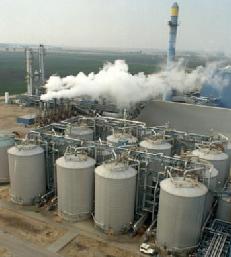
Ethanol production is very energy intensive, requiring mini-power plants just to produce the steam they need. Some proposed ethanol plants have sought to locate next to existing trash incinerators, coal or waste coal power plants or other industries capable of sharing steam with their new industrial neighbors. This may save energy, but it results in the concentrating of polluting industries in already poisoned communities. Most ethanol plants have their own power production facilities, usually burning natural gas, but some have been coal-powered. During the ethanol biorefinery building binge around 2005, when coal was cheap and gas was still expensive, it was forecast that nearly all new ethanol facilities would burn coal.33 Thankfully, that didn't seem to happen. Some of the proposed ethanol plants sought to install gasification-style incinerators capable of burning anything from very toxic waste streams like trash, tires, plastics, construction and demolition wood waste to lesser contaminated wastes like animal, crop and food production wastes and forestry residues. All of these fuels have their own set of contaminants that would be released into the community through air pollution and the production of toxic ash. Since the facility can make more money serving as a waste disposal site by taking the more dangerous waste streams, this economic incentive will encourage these plants to become de facto incinerators for trash and tires.
Other parts of the biorefinery production process release pollution as well. Prodded by hundreds of complaints at the Gopher State Ethanol plant in St. Paul, where residents complained that the plant smelled like "rubbing alcohol mixed with burning corn," the Minnesota Pollution Control Agency began testing emissions from the plant. They found high levels of carbon monoxide, methanol, toluene and other Volatile Organic Compounds, including formaldehyde and acetaldehyde, both of which are known to cause cancer in animals.
The EPA then tested other ethanol plants and concluded that "most, if not all" ethanol plants are emitting air pollutants at many times the rate allowed by their permits. Between 2002 and 2005, EPA settled cases with ADM and Cargill, the largest ethanol producers, over their 9 ethanol plants, forcing them to pay out over $485 million for these and other facilities, mostly to invest in afterburners to burn off the exhaust gases that cause most of the odors. Settlements with 12 Minnesota ethanol plants resulted in similar requirements to cut back on emissions of nitrogen oxides, carbon monoxide, volatile organic compounds, particulates, and other hazardous pollutants.34
Even after installing new equipment, neighborhood residents continue to complain of odors and ill health effects, since emissions still continue through leaking pipes and through vents when the pollution control equipment isn’t working.35
Water Use and Pollution
For each gallon of ethanol produced, typical ethanol plants consume 3.5 to 6 gallons of water 36 and produce 12 gallons of sewage-like effluent in the fermentation and distillation process.37 Syrup, batches of bad ethanol, and sewage are dumped into streams, threatening fish and plants with chloride, copper and other wastes which deprive waters of oxygen when they decompose. A state inspector in Iowa reported that a creek next to the ethanol plant in Sioux Center was milky and smelled like sewage.38
Ethanol Vs. MTBE
For years, ethanol was promoted as the only alternative to MTBE, a oxygenate used in gasoline to meet federal requirements for controlling ground-level ozone. These requirements were kept in place despite overwhelming scientific evidence that modern blends of gasoline without ethanol or MTBE burn more cleanly than the reformulated gasoline that was required in ozone non-attainment areas. A National Academy of Sciences report concluded that the "commonly available ethanol and MTBE blends do little to reduce smog.” They also found that, compared with MTBE blends, ethanol blends result in more pollutants evaporating from vehicle gas tanks.39 The Energy Bill finally scrapped the oxygenate requirement, but mandated a doubling of national ethanol production and use.40
Ethanol - The Fuel
Ethanol evaporates faster than gasoline. So while gasoline reformulated with ethanol may release less carbon monoxide, it releases more volatile organic compounds, hydrocarbons, and nitrogen oxides. You have more vapor emissions when you're refueling and when your car is sitting in a parking lot on a hot summer day. And ethanol can degrade systems in cars and boats, so you'll get more leaks.41
Ethanol costs three and a half times as much as gasoline to produce42 and contains only 60% as much energy per gallon as gasoline.43 So, while a gallon of ethanol-blended gas may cost the same as regular gasoline at the pump, it won't take you as far.
Ethanol must be blended with gasoline. But ethanol absorbs water. Gasoline doesn't. Therefore, ethanol cannot be shipped by regular petroleum pipelines. Instead, it must be shipped separately and mixed on-site. Shipping by truck, rail car, or barge are far more expensive than pipelines.44 They also carry larger risks of accidents during shipping.
Fires, Spills, and Explosions
Increasing the average mileage of passenger cars and SUVs by 3-5 miles per gallon would dwarf the effects of all possible biofuel production from all sources of biomass available in the U.S. Inflating passenger car tires properly today will have more impact on the energy independence of U.S. than the 2012 ethanol production requirements.55
http://www.alternet.org/envirohealth/33969/); also cited in “Warts and Ethanol – A new reliance on coal could sap green cred from the ethanol industry,” Grist, May 25, http://www.gefoodalert.org/library/admin/uploadedfiles/Crops_Under_Question_A_Briefing_Book_on_Geneti.pdf http://www4.nationalacademies.org/news.nsf/isbn/0309064457?OpenDocument Full report on "Ozone-Forming Potential of Reformulated Gasoline" is here:
Numerous fires, explosions and spills have occurred at ethanol plants and in shipping.45 In October 2003, a tank holding 40,000 gallons of corn mash exploded at a Benson, MN ethanol plant, killing one worker and causing a nearby 2,000 gallon ethanol tanker truck to burst into flames.46 In January 2004, an explosion caused a fierce fire at an Australian ethanol storage tank that took 14 fire crews over 20 hours to extinguish. Tail lights melted on cars parked 200 feet away.47 In February 2004, a tanker carrying 3.5 million gallons of ethanol exploded and sank off of the coast of Virginia. Only six of the 27-member crew survived.48 In May 2004, firefighters spent 16 hours battling a fire at an ethanol plant in Caro, MI.49 In September 2005, a tanker truck spilled at least 2,000 gallons of ethanol onto the ground and into sewers in Brentwood, OH, displacing 300 residents in the subsequent evacuation and loosening up the tar on the road, required that it be repaved.50
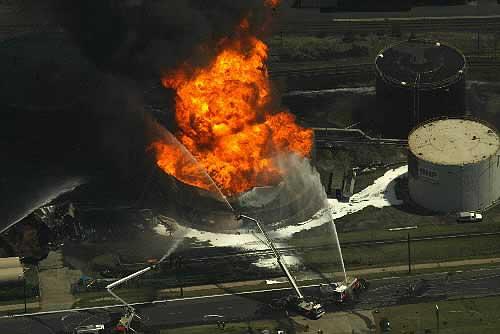
Ethanol Storage Tank Blaze, Port Kembla, Australia
Magnets for Corporate Factory Farms
Among the waste by-products of ethanol production is a corn mash known as distiller's grains. The large volumes of this waste product have to go somewhere. Ethanol plant operators – to save costs – seek to use this as animal feed, regardless of whether it’s nutritious and appropriate for such use. Iowa – the nation’s #1 state for ethanol plants – is seeing a large influx of corporate dairy operations now. Researchers have also found ways to produce hog feed with 30-40% gluten (ethanol plant protein mash). Ethanol plants could sever as magnets for attracting factory farms. This partnership adds insult to injury for communities bearing the burden of housing ethanol plants. Iowa – the nation’s #1 state for ethanol plants – is currently seeing a large influx of corporate dairy operations. Furthermore, a study published by Kansas State University researchers in December of 2007 found an increased prevalence of the deadly E. coli 0157 bacterium in the hind-gut of cattle fed distiller’s grains.51 This strongly suggests a link between the increased use of distiller’s grains by the beef industry and the increased prevalence of nation-wide beef recalls due to E. coli 0157 contamination. Net Energy: More Harm than Good?
Ethanol production using corn grain requires 29% more fossil energy than the ethanol fuel produces. Using switchgrass requires 50% more; wood biomass: 57% more.52 Inefficient solar cells produce about 100 times more electricity than corn ethanol.53Billions in Subsidies
Many billions of dollars go to subsidizing the corn industryand ethanol production. This money could go much further if invested in the transition to conservation, efficiency, wind and solar. The need for combustible fuels in transportation can be eliminated with the use of electric cars (and plug-in hybrids in the short term), using windpowered electricity, at a cost less than $1/gallon gasoline equivalent.54
http://www.thestarpress.com/articles/0/046436-2730-004.html
2006. http://www.grist.org/news/muck/2006/05/26/unethacoal/ Both articles cite McIlvaine Company (www.mcilvainecompany.com).
http://www.ers.usda.gov/Data/BiotechCrops/ExtentofAdoptionTable1.htm
Policy Center, July 23, 2001. http://www.biotech-info.net/corn_reduct.html Study shows slight increase in Roundup herbicide on Roundup Ready corn.
2 (April 2005), pp. 618–627. http://www.pitt.edu/~biohome/Dept/pdf/1616.pdf See also Dr. Relyea's Response to Monsanto's Concerns About His Research on the Toxicity of Herbicide Roundup. Relyea Lab, University of Pittsburgh.
http://www.pitt.edu/~relyea/Site/Roundup.html
http://www.energyjustice.net/ethanol/pimentel2003.pdf
http://news.minnesota.publicradio.org/features/200209/23_losurem_ethanol/
http://www.startribune.com/stories/484/5801665.html
http://desmoinesregister.com/apps/pbcs.dll/article?AID=/20050911/NEWS03/509110345/1001/NEWS
http://www.nap.edu/books/0309064457/html/
http://frwebgate.access.gpo.gov/cgi-bin/getdoc.cgi?dbname=109_cong_bills&docid=f:h6enr.txt.pdf
http://bioenergy.ornl.gov/papers/misc/energy_conv.html
Resources Research Vol 14, No.1 (March 2005). http://petroleum.berkeley.edu/papers/Biofuels/NRRethanol.2005.pdf
http://petroleum.berkeley.edu/papers/patzek/CRPS416-Patzek-Web.pdf
coal, nuclear and gas-powered electric grid, it would still cost under $1/gallon gasoline equivalent. See the following websites for more info:
http://www.pluginpartners.org, http://www.pluginamerica.com, http://www.calcars.org, http://www.whokilledtheelectriccar.com
http://www.berkeley.edu/news/media/releases/2005/08/NPC_briefing_Patzek.pdf
Last modified: 9 June 2010